




Busbar Copper Pins
Suzhou Kiande Electric Co., Ltd. is one of the most reliable manufacturers and suppliers of Busbar Copper Pins in China. We are committed to providing high quality custom service and OEM&ODM service to global clients. If you're going to buy CE approved Busbar Copper Pins made in China, welcome to get quotation from our factory. For price consultation, contact us.
In low-voltage power distribution systems, busway systems use a continuous conductive trunk to distribute electricity, offering an alternative to traditional radial wiring systems consisting of cables and distribution boxes. To supply power to downstream equipment at various points along the busway, plug-in outlets are provided, with a set of conductive contacts installed inside each plug-in box to establish electrical contact with the main busbars. These components are known as Busbar Copper Pins.
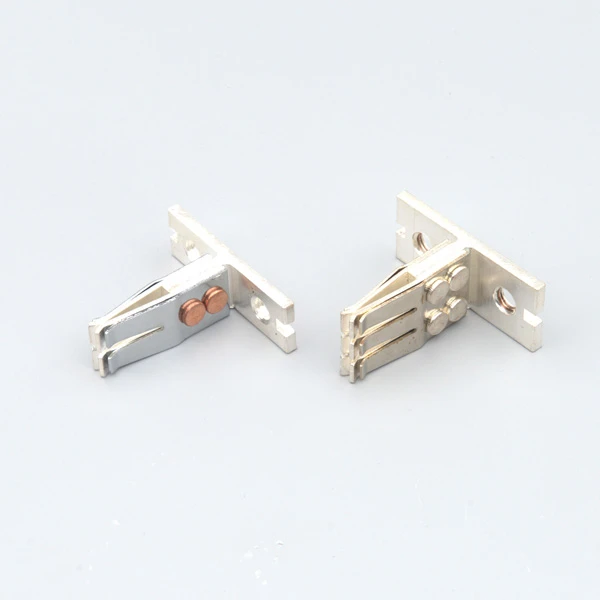
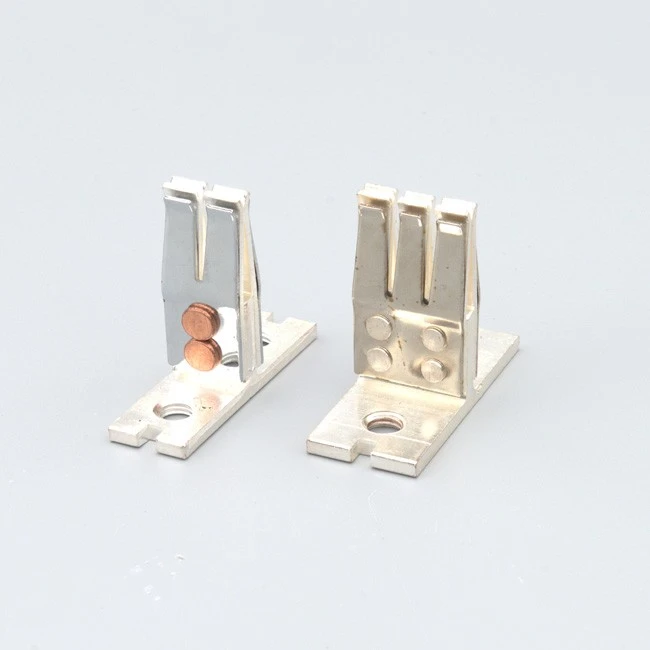
Independently designed and manufactured by Suzhou Kiande Electric, our busbar copper pins are made from high-conductivity copper and feature an overall silver-plated surface for reliable electrical connections in low-voltage busway systems.
They are designed for use in both compact (sandwich) busway systems and air-insulated busway systems. Depending on the product specification and system configuration, they can be supplied for applications across a current range of 0–630 A and integrated with modular outgoing circuit protection units, including miniature circuit breakers (MCBs) and molded case circuit breakers (MCCBs).
The primary function of busbar copper pins is to establish a stable current path between the main busbars and plug-in units while maintaining low contact resistance and supporting repeated insertion and removal where the system is designed for such operation.
Although small in size, these contact components can significantly affect the electrical connection quality, temperature rise, voltage drop, and long-term operational reliability of a busway system.


Working Principle
Busbar copper pins are key conductive components that establish physical and electrical contact between the energized main busbars and removable plug-in boxes.
In many busway designs, the main busbars are insulated with Mylar polyester film, with designated contact windows providing access to the conductive surfaces. When a compatible plug-in box is correctly installed, the copper pins engage with the designated contact areas, establishing an electrical connection with the main busbars.
The exact contact arrangement and installation method depend on the busway design. Proper alignment, sufficient contact pressure, and compatible insulation structures are essential for reliable electrical performance.
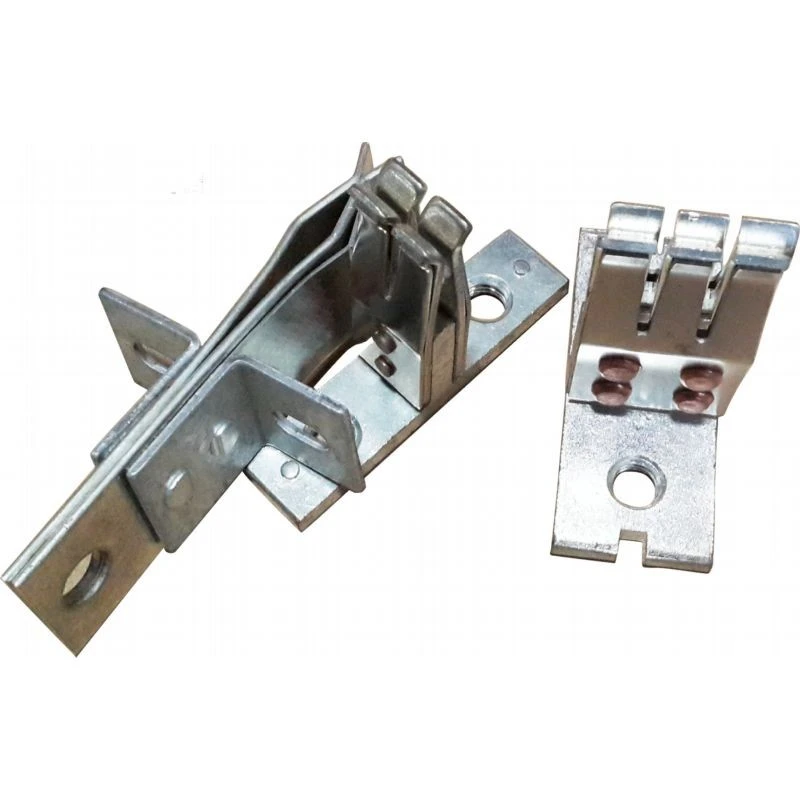
Kiande busbar copper pins are available in two main series according to the busway system type they are designed for.
Busbar copper pin
| Model | Current | Busbar Size | Busbar Type |
| KDT-15-5 | 0~100A | 4mm/5mm | Compact Busbar |
| KDT-18-5 | 100-200A | 4mm/5mm | Compact Busbar |
| KDT-22-5 | 250~350A | 4mm/5mm | Compact Busbar |
| KDT-30-5 | 400-630A | 4mm/5mm | Compact Busbar |
| KDT-15-6 | 0~200A | 6mm | Compact Busbar |
| KDT-18-6 | 250~350A | 6mm | Compact Busbar |
| KDT-28-6 | 400-630A | 6mm | Compact Busbar |
| KDF-125 | 0~125A | 19 phase/22 phase/26 phase or above | Air Busbar |
| KDF-160 | 125~160A | 19 phase/22 phase/26 phase or above | Busbar |
| KDF--250 | 160-250A | 19 phase/22 phase/26 phase or above | Air Busbar |
| KDF--630 | 315-630A | 19 phase/22 phase/26 phase or above | Air Busbar |
Our busbar copper pins can be customized according to the customer's busbar dimensions, phase spacing, and current rating. Solutions are available for systems using copper or aluminum conductors, subject to the applicable contact design and material compatibility requirements.
We can also supply complementary components for plug-in boxes, including pin holders, insulating sleeves, and grounding copper pins, helping customers source compatible components for their busway connection systems.
Product Advantages
1. Low Contact Resistance
Made from high-conductivity copper with an overall silver-plated surface, our copper pins are designed to provide reliable electrical contact and help reduce contact resistance. Appropriate material selection, plating quality, and contact pressure contribute to effective heat management and stable operation under rated conditions.
2. Designed for Repeated Plug-in Operations
Precision stamping and forming help achieve consistent contact geometry. The silver-plated surface is designed to support electrical conductivity and contact performance under appropriate operating conditions.
For applications involving frequent changes to factory production lines or plug-in maintenance in data centers, the contact design, plating specification, and operating conditions should be considered together to maintain reliable electrical connections.
3. Wide Current Rating Options
From lighting distribution circuits to higher-current power distribution applications, different product specifications can be selected according to the required current rating and busway configuration.
This allows customers to select suitable copper pin solutions for different electrical distribution requirements without unnecessarily changing the overall connection design.
4. Multiple Dimensional Options
For compact busway systems, copper pins can be configured for busbar thicknesses of 4 mm, 5 mm, and 6 mm. For air-insulated busway systems, options can be selected according to phase spacing within the 19–26 mm range.
Final model selection should be based on the actual busbar dimensions, phase spacing, plug-in box structure, and electrical requirements to ensure compatibility with the intended busway system.
5. Customized Designs and Complete Component Supply
As a supplier of busway automation equipment and busway accessories, Kiande can customize copper pin profiles according to customer drawings, plug-in box structures, current ratings, and temperature-rise requirements.
Complementary components, including pin holders, insulating sleeves, and grounding clamps or pins, can also be supplied according to project requirements.
6. Direct Manufacturing and Quality Control
Suzhou Kiande Electric integrates product design, manufacturing, sales, and technical service capabilities.
Quality inspection procedures can include checks of contact resistance, plating thickness, and insertion and withdrawal forces, according to the applicable product specifications and inspection requirements.
Applications
Low-Voltage Power Distribution Systems
Used in compatible busway plug-in boxes to establish conductive connections for downstream distribution circuits.
Industrial Facilities and Factory Busway Systems
Suitable for power distribution along production lines, workshops, and industrial facilities. Plug-in boxes provide connection points for machine tools, production equipment, and individual workstations.
Data Centers and Computing Facilities
Designed for use in compatible plug-in power distribution systems serving server racks and other high-density electrical loads, where reliable electrical contact and controlled temperature rise are important.
Commercial Buildings and Real Estate Projects
Applicable to compact busway systems with compatible MCB plug-in boxes for lighting, air-conditioning, and other downstream electrical loads in office buildings, shopping centers, and underground parking facilities.
Renewable Energy and EV Charging Infrastructure
May be used in compatible busbar distribution assemblies within photovoltaic power distribution equipment, EV charging distribution panels, and related electrical systems, subject to the specific product design and application requirements.
Installation and Usage Precautions
1. Inspect the copper pins before installation.
Check the plating surface for visible damage, oxidation, discoloration, or mechanical deformation. Components that do not meet the applicable acceptance criteria should not be installed.
2. Install plug-in boxes correctly.
Insert the plug-in box smoothly and align it with the designated installation position. Avoid forced insertion, impact, or misalignment that could deform the copper pins or damage the busbar insulation.
3. Inspect connection temperature during operation.
Establish an appropriate inspection schedule based on the system design, operating conditions, and maintenance requirements. Infrared thermography or suitable temperature-monitoring devices can be used to check connection temperatures. If temperature rise exceeds the specified limit, inspect the contact pressure, installation alignment, conductor surface condition, and plating condition.
4. Follow electrical safety procedures during insertion and removal.
Do not perform plug-in or removal operations on energized equipment unless the system is specifically designed for such operation and the applicable safety procedures explicitly permit it. Where required, isolate the relevant power supply and verify the absence of voltage before performing maintenance or changing connections.
5. Establish a preventive maintenance plan.
Copper pins are electrical contact components subject to wear and environmental influences. Inspection and replacement intervals should be determined according to the manufacturer's recommendations, actual insertion cycles, operating conditions, and inspection results. Replace components when wear, deformation, plating damage, or electrical performance deterioration exceeds the applicable limits.
FAQ
Q: Why do some manufacturers use tin-plated copper pins while Kiande uses silver-plated copper pins?
A: Tin plating and silver plating have different cost and performance characteristics.
Silver offers high electrical conductivity and can provide favorable contact performance in appropriately designed electrical connections. Tin plating may be suitable for other applications depending on the contact design, operating temperature, environment, and required service life.
The appropriate plating solution should be selected according to the current rating, contact pressure, expected insertion cycles, environmental conditions, and applicable performance requirements. Actual performance depends on the complete contact system rather than the plating material alone.
Q: If copper pins experience excessive heating, does this necessarily indicate a product quality problem?
A: Not necessarily. Excessive contact temperature can result from several factors, including:
Oxidation or contamination on the busbar contact surfaceInsufficient contact pressure due to incomplete plug-in box installation
Actual circuit current exceeding the rated operating conditions
Uneven phase loading or other abnormal operating conditions
Worn, damaged, or improperly installed contact components
A systematic inspection of the installation, contact pressure, busbar surface, load conditions, and component condition is recommended before determining whether the copper pins need to be replaced.
Q: Are these copper pins compatible with aluminum busbars?
A: Solutions may be available for busway systems using aluminum conductors, subject to the contact design and material compatibility requirements.
Direct copper-to-aluminum contact can introduce risks of galvanic corrosion under certain environmental conditions. Suitable transition components, compatible plating systems, or other approved connection designs may therefore be required.
Please provide the busbar material, dimensions, current rating, and plug-in box structure to the Kiande technical team so that the appropriate configuration can be evaluated.
Q: What are the MOQ and lead time?
A: MOQ, stock availability, and delivery time depend on the selected model, order quantity, customization requirements, and shipping destination.
Availability of standard models should be confirmed with the Kiande sales team. For customized products, samples may be produced and evaluated according to customer drawings and technical specifications before batch production.
Hot Tags: Busbar Copper Pins, China Busbar Copper Pins manufacturers, suppliers, factory
Previous
Busbar Insulation TubeYou Might Also Like
Send Inquiry