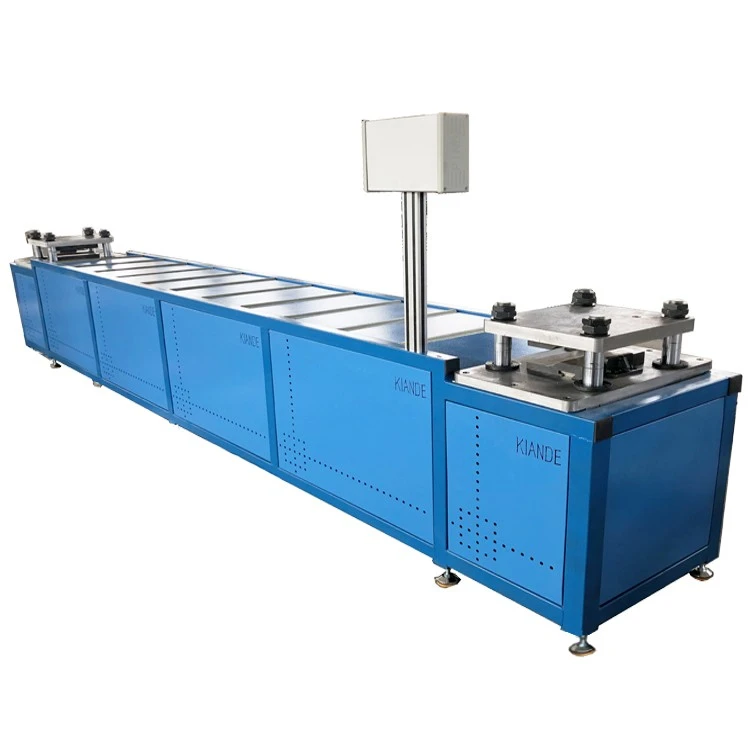
In the electrical manufacturing industry, the demand for high - quality busbar components is on the rise. As a reliable Busbar Profile Cutting Processing Machine supplier, I am well - versed in the critical role of cutting smoothness in these machines. Let's take a deep dive into what exactly the cutting smoothness of a Busbar Profile Cutting Processing Machine entails.
Understanding the Basics of Cutting Smoothness
Cutting smoothness refers to the quality of the cut surface produced by a Busbar Profile Cutting Processing Machine. A smooth cut is characterized by a clean, even, and burr - free edge on the busbar. When a busbar is cut smoothly, it not only enhances the aesthetic appearance of the finished product but also has far - reaching implications for its functionality.
In electrical applications, busbars are used to conduct electricity. Any irregularities, such as burrs or rough edges, can cause localized heating. This is because sharp edges or burrs can increase the electrical resistance at those points. According to the principles of electrical engineering, higher resistance leads to more power dissipation in the form of heat. Over time, excessive heat can damage the busbar itself and even pose a safety hazard to the entire electrical system.
Factors Affecting Cutting Smoothness
1. Blade Quality and Sharpness
The blade is the most crucial part of the cutting process. A high - quality blade made from the right material, such as high - speed steel or carbide, can significantly improve cutting smoothness. Sharp blades can make clean cuts through the busbar with minimal force. As the blade dulls over time, it starts to tear the busbar instead of making a clean cut, resulting in a rough edge. Regular blade maintenance, including sharpening and replacement when necessary, is essential to ensure consistent cutting smoothness.
2. Cutting Speed
The speed at which the machine cuts the busbar also affects the smoothness of the cut. If the cutting speed is too high, the blade may not have enough time to fully penetrate and separate the material, leading to a rough cut with jagged edges. On the other hand, if the cutting speed is too low, it can cause over - heating and deformation of the busbar, also degrading the quality of the cut. Finding the optimal cutting speed for different types and thicknesses of busbars is a key skill in achieving smooth cuts.
3. Machine Rigidity and Stability
A rigid and stable machine is necessary for smooth cutting. Vibrations during the cutting process can cause the blade to deviate from its intended path, resulting in an uneven cut. Our Busbar Profile Cutting Processing Machine is designed with a robust frame and advanced vibration - damping technology to minimize vibrations and ensure a smooth cutting operation.
4. Material Properties of the Busbar
The type of material used in the busbar, such as copper, aluminum, or steel, and its hardness, thickness, and grain structure, all play a role in cutting smoothness. For example, copper busbars are generally softer and easier to cut smoothly compared to steel busbars. However, different alloys of the same metal can also have different cutting characteristics. Our machine is engineered to handle a wide range of busbar materials, and we provide guidance on adjusting the cutting parameters according to the specific material properties.
Measuring Cutting Smoothness
There are several ways to measure the cutting smoothness of a busbar. One common method is to use a surface roughness tester. This device measures the height variations of the cut surface and provides a numerical value for the surface roughness. A lower roughness value indicates a smoother cut.
Visual inspection is also an important way to assess cutting smoothness. A trained operator can visually detect burrs, jagged edges, and unevenness on the cut surface. Additionally, the use of precision measuring tools, such as calipers, can be used to check the dimensional accuracy of the cut, which is also related to the smoothness of the cutting process.
Importance of Cutting Smoothness in Different Applications
1. Electrical Panels
In electrical panels, busbars are used to distribute electrical power. Smooth - cut busbars ensure a secure and reliable connection between different electrical components. They also reduce the risk of electrical arcing, which can cause short - circuits and damage to the panel. Our Copper Busbar Processing Machine is specifically designed to produce high - quality, smoothly cut copper busbars for electrical panel applications.
2. Power Generation and Distribution
In power plants and substations, busbars are responsible for transmitting large amounts of electrical energy. The smoothness of the cut directly affects the efficiency of power transmission. Rough - cut busbars can lead to energy losses due to increased resistance, which can have a significant impact on the overall performance of the power system. Our Hydraulic Busbar Processing Machine offers precise and smooth cutting capabilities, which are essential for power generation and distribution applications.
3. Industrial Machinery
Many industrial machines rely on busbars for electrical power supply. Smooth - cut busbars ensure the proper functioning of these machines by providing a stable electrical connection. They also contribute to the longevity of the machines by reducing the risk of electrical failures. Our Busbar Profile Processing Machine can be customized to meet the specific cutting requirements of different industrial machinery.
Our Solutions for Optimal Cutting Smoothness
As a leading supplier of Busbar Profile Cutting Processing Machines, we offer a range of solutions to ensure optimal cutting smoothness. Our machines are equipped with state - of - the - art technology and high - quality components.
For example, our CNC Busbar Processing Machine uses computer - numerical control technology to precisely control the cutting process. It can automatically adjust the cutting speed, blade position, and other parameters according to the pre - set specifications, ensuring consistent and smooth cuts.
We also provide comprehensive after - sales service, including blade maintenance training, machine calibration, and technical support. Our team of experts is always ready to assist our customers in achieving the best cutting results.

Conclusion
The cutting smoothness of a Busbar Profile Cutting Processing Machine is a critical factor in the quality and performance of busbar components. It affects not only the appearance but also the functionality and safety of electrical systems. As a trusted supplier, we are committed to providing high - quality machines and solutions that ensure optimal cutting smoothness.
If you are in the market for a reliable Busbar Profile Cutting Processing Machine or have any questions about cutting smoothness, we invite you to contact us for a detailed discussion. Our team of professionals will be more than happy to assist you in finding the best solution for your specific needs.
References
- Electrical Power Distribution Handbook, by Dugan, McGranaghan, and Beaty.
- Manufacturing Engineering and Technology, by Serope Kalpakjian and Steven Schmid.