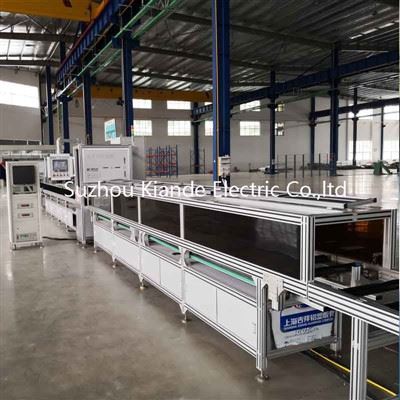
If you've ever walked through a commercial building's electrical room, you might have noticed rows of thick copper bars running between circuit breakers, transformers, and distribution panels. Those are busbars, and they're the unsung heroes of electrical power distribution-carrying large currents safely from one point to another. At the heart of every reliable busbar system is the busbar copper pin, a small component that often gets overlooked but plays a critical role in maintaining conductivity, preventing overheating, and ensuring long-term performance. As a supplier of busbar copper pins, I've worked with engineers, electricians, and system designers for years, and one question comes up time and again: why does the shape of these pins matter so much, and how does it directly impact electrical performance? Let's break this down, because it's not just about cutting copper to a size-it's about engineering for efficiency.
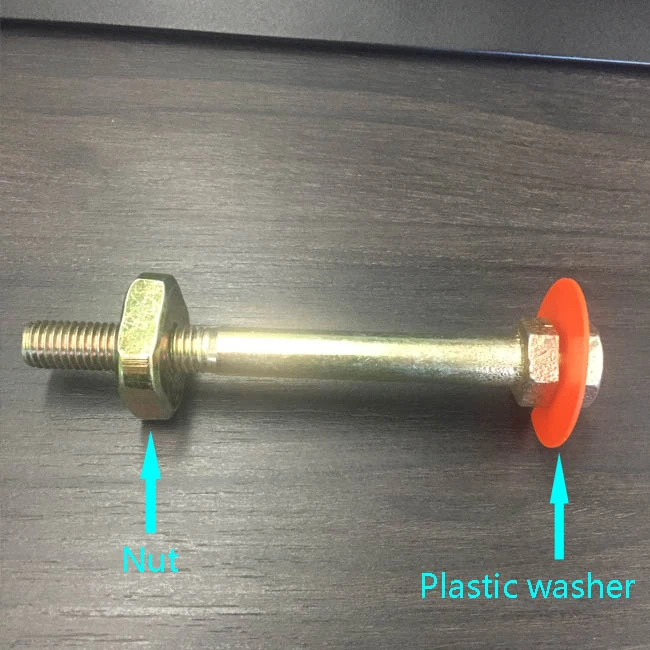
First, let's start with the basics: what is a busbar copper pin? Simply put, it's a solid copper fastener designed to connect busbars to other electrical components, or to join two busbar sections together. Unlike standard bolts, these pins are crafted from high-conductivity copper (usually C11000 or C10100, known for their low electrical resistance and corrosion resistance) and shaped to create a secure, low-resistance connection. Their shape-whether cylindrical, square, tapered, or with specific chamfers or flanges-isn't arbitrary. Each design choice affects how current flows through the connection, how heat dissipates, and how well the pin maintains its grip over time, even as temperature cycles cause expansion and contraction.
One of the most common shape variations I see is between cylindrical and square copper pins, and the difference in electrical performance is striking. Let's talk about skin effect first, because that's a key concept for high-current applications. The skin effect describes how alternating current (AC) tends to distribute itself near the surface of a conductor, rather than evenly through its cross-section. For busbar pins, which carry AC in most commercial and industrial setups, this means the effective conductive area is smaller than the total cross-sectional area of the pin. A cylindrical pin has a curved surface, so the current distribution is more concentrated at the outer circumference-but wait, square pins have sharp corners. Those corners create a phenomenon called current crowding, where even more AC accumulates at the edges of the square. This leads to higher current density in those small areas, which in turn increases resistive heating. Over time, that extra heat can degrade the pin's copper and the surrounding insulation, leading to premature component failure. I've seen this happen firsthand: a customer once switched from square to cylindrical pins for a 500A busbar system, and their temperature readings dropped by 12°C almost immediately. That's a huge difference in terms of long-term reliability.
Another critical shape factor is the pin's diameter and how it interfaces with the busbar hole it's inserted into. Too small a diameter, and you get loose connections-current has to jump through tiny gaps, creating resistance and arcing. Too large, and you risk damaging the busbar during installation, or the pin might not seat properly, leading to uneven contact. But beyond just size, the shape of the pin's tip matters. Tapered vs. flat tips: tapered pins are designed to self-center, making installation easier, but they can leave a small gap at the top of the busbar hole if not torqued correctly. Flat-tipped pins create a wider, more even contact surface, which reduces resistance by ensuring the current flows directly between the pin and the busbar, not through a narrow point. That's why, for high-voltage applications where consistency is key, I recommend flat-tipped copper pins. Of course, every system is different-some installations require tapered pins for tight spaces, but it's important to account for that in the design.
Heat dissipation is another area where shape makes a huge difference. Electrical resistance generates heat, and if that heat can't escape, the pin's temperature rises, which increases its resistance even more-a vicious cycle that can lead to overheating. The surface area of the pin is key here: a pin with a larger surface area will dissipate heat faster. Square pins have more surface area than a cylindrical pin of the same cross-sectional area, but wait-we already talked about current crowding in square pins. It's a trade-off! So, it's not just about surface area; it's about where that surface area is. Cylindrical pins have a uniform surface around their circumference, so heat can escape evenly, while square pins have concentrated heat at their corners. That means even with more total surface area, square pins can run hotter in high-current setups because the heat isn't distributed evenly. That's a lesson I've learned from working with thousands of busbar systems: shape has to be matched to the current load to balance conductivity and heat management.
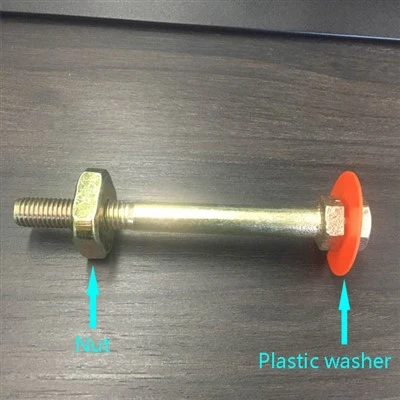
Let's also talk about long-term performance, which ties into how shape affects mechanical stability. Busbars expand and contract with temperature changes (copper has a coefficient of thermal expansion of about 17 ppm/°C), so the connection between the pin and the busbar has to stay tight to maintain low resistance. Pins with flange designs-like a wider shoulder at one end-create a more secure grip, preventing the pin from loosening as the busbar moves. Without that flange, even a properly torqued pin can shift over time, creating gaps and increasing resistance. I always tell customers to pair their copper pins with accessories designed to complement the shape, like Busbar Double Head Bolt for connecting busbar ends, or Busbar Busbar Joint Connector for splice points. These accessories work together with the pins to ensure the connection stays intact through temperature cycles, mechanical vibration, and electrical load changes. That's why it's not just the pin itself-it's how its shape integrates with the overall busbar system.

Corrosion resistance is another often-overlooked point, and shape plays a role here too. Sharp corners and small gaps in a pin's shape can trap moisture, dust, and contaminants, leading to oxidation over time. Oxide layers on copper have much higher resistance than copper itself, so even a thin oxide layer can significantly increase connection resistance. Cylindrical pins with rounded edges are less prone to trapping debris, so they maintain a cleaner contact surface longer. I've had customers in coastal areas (where salt air accelerates corrosion) switch to cylindrical pins specifically for this reason, and they've reported much lower maintenance needs. Busbar Insulation Tube is also a good addition here, as it covers exposed pin ends to prevent moisture from seeping in, but the pin's shape still matters in how well the insulation fits.
Now, let's get into some real-world examples to put this in perspective. Last year, I worked with a renewable energy company that was building a 1MW solar inverter system. Initially, they used square copper pins because they thought they'd be easier to machine and install. But when they tested the system at full load, the pin temperatures hit 85°C-way above the recommended 60°C limit for their insulation. We switched to cylindrical pins with a slightly larger diameter, and paired them with Busbar Belleville Washer to maintain consistent tension as the components heated up. After the swap, their pin temperatures dropped to 58°C, and they haven't had any overheating issues in the year since. That's the power of understanding shape: it's not just a design detail, it's a performance driver.
Another example: a manufacturing plant that was experiencing frequent circuit trips in their distribution panels. Their electricians traced the problem to loose busbar connections. The pins they were using had a tapered shape with a very narrow tip, so when the bolts were torqued, the pin wouldn't fully seat in the busbar hole, creating a high-resistance connection. We recommended a flat-tipped copper pin with a slightly longer shank, which ensured full contact when torqued, and added Busbar Copper Pins from our catalog that were precision-machined to eliminate the gap. The circuit trips stopped immediately, and they've since upgraded all their panels with this new pin design.
It's also important to note that shape isn't the only factor-material quality matters too. Our busbar copper pins are made from oxygen-free copper (OFC), which has 99.95% purity, so the conductivity is consistent, and we machine them to tight tolerances to ensure uniform shape. A poorly shaped pin, even from high-quality copper, will underperform. That's why as a supplier, we don't just sell pins-we work with our customers to design the right shape for their specific application, whether it's low-voltage, high-current, or harsh environmental conditions.
So, what should you look for when choosing a busbar copper pin shape? First, match it to your current load: high-AC current systems benefit from cylindrical pins to reduce current crowding. Second, consider heat dissipation: uniform surface area (like a cylinder) helps spread heat evenly, while flanges add surface area for cooling. Third, think about mechanical stability: a flange shape or flat tip ensures secure seating and prevents loosening over time. Fourth, account for the environment: rounded edges resist corrosion better in damp or dirty areas. And don't forget that the pin's shape has to work with other components-like the accessories I mentioned earlier, whether you're using Busbar Double Head Bolt for splices, Busbar Busbar Joint Connector for mid-panel connections, or Busbar Insulation Tube for added protection.
At the end of the day, the shape of a busbar copper pin isn't just a manufacturing choice-it's an electrical one. A pin that looks almost identical to another could make the difference between a system that runs reliably for 20 years and one that fails prematurely. As someone who's spent years refining these components, I can tell you that every chamfer, diameter, and tip design is intentional, and each one directly impacts how current flows, how much heat is generated, and how long the connection lasts.
If you're designing a new busbar system, troubleshooting an existing one, or just looking to upgrade your copper pins, I'd be happy to walk through your needs and recommend the right shape for your application. Whether you're working on a small commercial panel or a large industrial power distribution system, getting the pin shape right is key to keeping your electrical performance on track. To learn more about our range of copper pins and compatible accessories, you can browse our selection here. When you're ready to discuss your project, reach out to our team to connect with a design specialist who can help you find the perfect fit for your busbar system.
References
- Copper Development Association. (2020). Electrical Conductivity of Copper and Copper Alloys.
- IEEE Standards Association. (2018). IEEE Std 80-2018: Standard for Safety in AC Substation Grounding.
- National Electrical Manufacturers Association (NEMA). (2021). NEMA Standard PB-2: Busbars for Electrical Power Distribution.
- International Electrotechnical Commission (IEC). (2019). IEC 60439-1: Low-voltage switchgear and controlgear assemblies.
- Thermal Analysis for Electrical Components. (2022). Journal of Electrical Engineering, Vol. 73, No. 3, pp. 189-196.