As a supplier of Busbar Copper Pins, I'm often confronted with questions about the conductivity of these essential electrical components. Conductivity is a key physical property that plays a crucial role in the performance of a busbar copper pin, and understanding it is vital for anyone involved in electrical systems, from engineers to procurement managers.
Understanding Conductivity
Conductivity, in the context of electrical engineering, refers to a material's ability to conduct an electric current. It is the reciprocal of resistivity and is measured in siemens per meter (S/m). A high - conductivity material allows electrons to flow through it easily, which is essential for minimizing power loss and heat generation in electrical circuits.
Properties of Copper as a Conductive Material
Copper is one of the most widely used materials in the electrical industry, and for good reason. It has excellent electrical conductivity, second only to silver. In fact, the International Annealed Copper Standard (IACS) defines 100% conductivity as the conductivity of highly pure (99.9% pure) copper at 20°C. The conductivity of pure copper is approximately 58 × 10⁶ S/m.
The high conductivity of copper is due to its atomic structure. Copper has one free electron in its outer shell, and these free electrons can move freely through the lattice of copper atoms when an electric field is applied. This ease of electron movement results in low resistance to the flow of electric current.
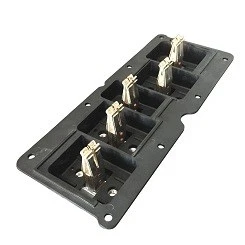
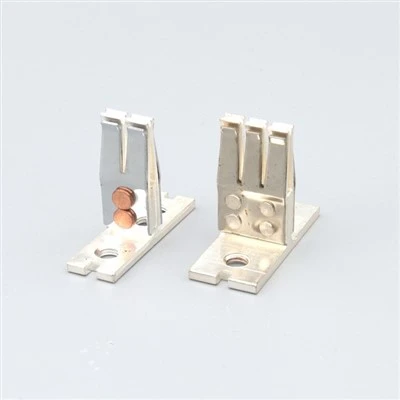
Conductivity of Busbar Copper Pins
Busbar copper pins are made from high - purity copper to take full advantage of its excellent conductivity. The exact conductivity of a busbar copper pin can vary depending on several factors:
Purity of Copper
The purity of the copper used to manufacture the busbar copper pin has a direct impact on its conductivity. Higher - purity copper has fewer impurities, which means there are fewer obstacles for the electrons to move through. Impurities can scatter the electrons, increasing the resistance and reducing the conductivity. The conductivity of a busbar copper pin depends partly on the grade and purity of the copper used.
Temperature
Temperature also affects the conductivity of copper. As the temperature increases, the atoms in the copper lattice vibrate more vigorously. These increased vibrations make it more difficult for the free electrons to move through the material, resulting in an increase in resistance and a decrease in conductivity. For most applications, the operating temperature of the busbar copper pins should be kept within a reasonable range to maintain good conductivity. Typically, we design our busbar copper pins to perform well at normal operating temperatures in electrical systems.
Manufacturing Process
The manufacturing process can influence the conductivity of the busbar copper pin. For example, proper annealing can improve the crystal structure of the copper, reducing internal stresses and enhancing conductivity. Our manufacturing process involves strict quality control measures to ensure that each busbar copper pin meets the highest standards of conductivity.
Importance of High Conductivity in Busbar Copper Pins
High conductivity in busbar copper pins is crucial for several reasons:
Reduced Power Loss
In an electrical circuit, power loss is given by the formula (P = I^{2}R), where (P) is the power loss, (I) is the current, and (R) is the resistance. A busbar copper pin with high conductivity has low resistance. As a result, the power loss in the circuit is minimized, which means more power is delivered to the intended load. This is particularly important in high - power applications where even a small reduction in power loss can lead to significant energy savings over time.
Lower Heat Generation
When an electric current passes through a conductor, it generates heat according to the same (P = I^{2}R) formula. High - conductivity busbar copper pins generate less heat because of their low resistance. Excessive heat can damage the surrounding electrical components and reduce the lifespan of the entire electrical system. By using busbar copper pins with high conductivity, we can keep the temperature of the electrical system under control and ensure its reliability.
Complementary Products
In addition to busbar copper pins, our product range includes several complementary products that work together to ensure the efficient and safe operation of electrical systems. For example, the Busbar Busbar Joint Connector is designed to provide a secure and low - resistance connection between busbars. It is made from high - quality materials with good conductivity to minimize power loss at the joints.
The Busbar Insulation Tube is used to insulate the busbars and busbar copper pins, protecting them from environmental factors and preventing electrical leakage. It is made from materials with high dielectric strength and good thermal stability.
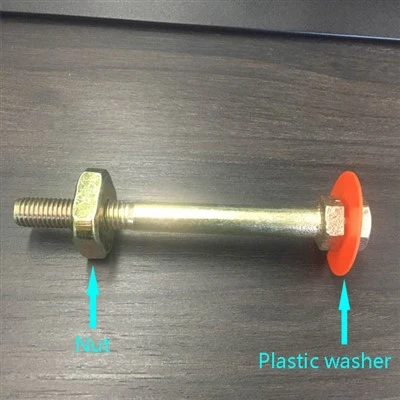
The Busbar Double Head Bolt and Busbar Double Head Nut are used to fasten the busbars and related components securely. They are also made from materials with appropriate conductivity and mechanical strength to ensure the stability and performance of the electrical system.
Contact for Purchase and Negotiation
If you are in the market for high - quality busbar copper pins or any of our other busbar accessories, we encourage you to reach out to us for further discussion. Our team of experts can provide you with detailed information about our products, including their conductivity, performance, and suitability for your specific applications. We are committed to providing the best solutions to meet your electrical system needs. Whether you are working on a small - scale project or a large - scale industrial installation, we have the products and expertise to support you.
References
- Grover, F. W. (1946). Inductance calculations: working formulas and tables. Dover Publications.
- Crolla, J. A. (2001). Principles of electrical engineering. Oxford University Press.